The GembaKai
Waste Walk
Your team isn’t slow — it’s leaking time. The Waste Walk finds the leaks: two minutes of logging a day for a couple of weeks, a one-hour readout, and the team knows exactly which hours it can win back.

What one team actually recovered
Ten days of logging, one readout and two follow-on workshops uncovered a 64% lift in deliverable capacity — no new headcount, no new tooling.
Recovered productivity
The hours the team gets back by fixing its two most expensive leaks. Same people, same calendar.
Manual work waiting for automation
Repeated by hand, week after week, until someone names it. The waste walk surfaces it; the automation workshop picks what to automate first.
Rework traced upstream
Future rework eliminated by fixing the root cause: more frequent customer interaction, fewer handoffs, more precise acceptance criteria.
Capture, measure, improve
Three steps that fit inside two weeks — and repeat. Each pass pays for the next.
Capture
Two minutes a day, ten working days
Everyone logs what they worked on, and whether it was planned. No timesheets, no surveillance — the data belongs to the team.
Measure
One hour to read the data together
The readout turns the logs into hours and dollars, and points the team straight at its most expensive leak. Name it, then pick one workshop to attack it.
Improve
Action tied to the data
The workshop produces actions with owners and expected recovery. The next readout shows whether the number moved — either way, the team learns something true.
Two minutes to log, a business case to lean on
Capture is the easy part — a couple of taps from any device, just a minute or two a day. The platform does the heavy lifting: all the analytics that turn two weeks of honest data into a case the team can stand behind.
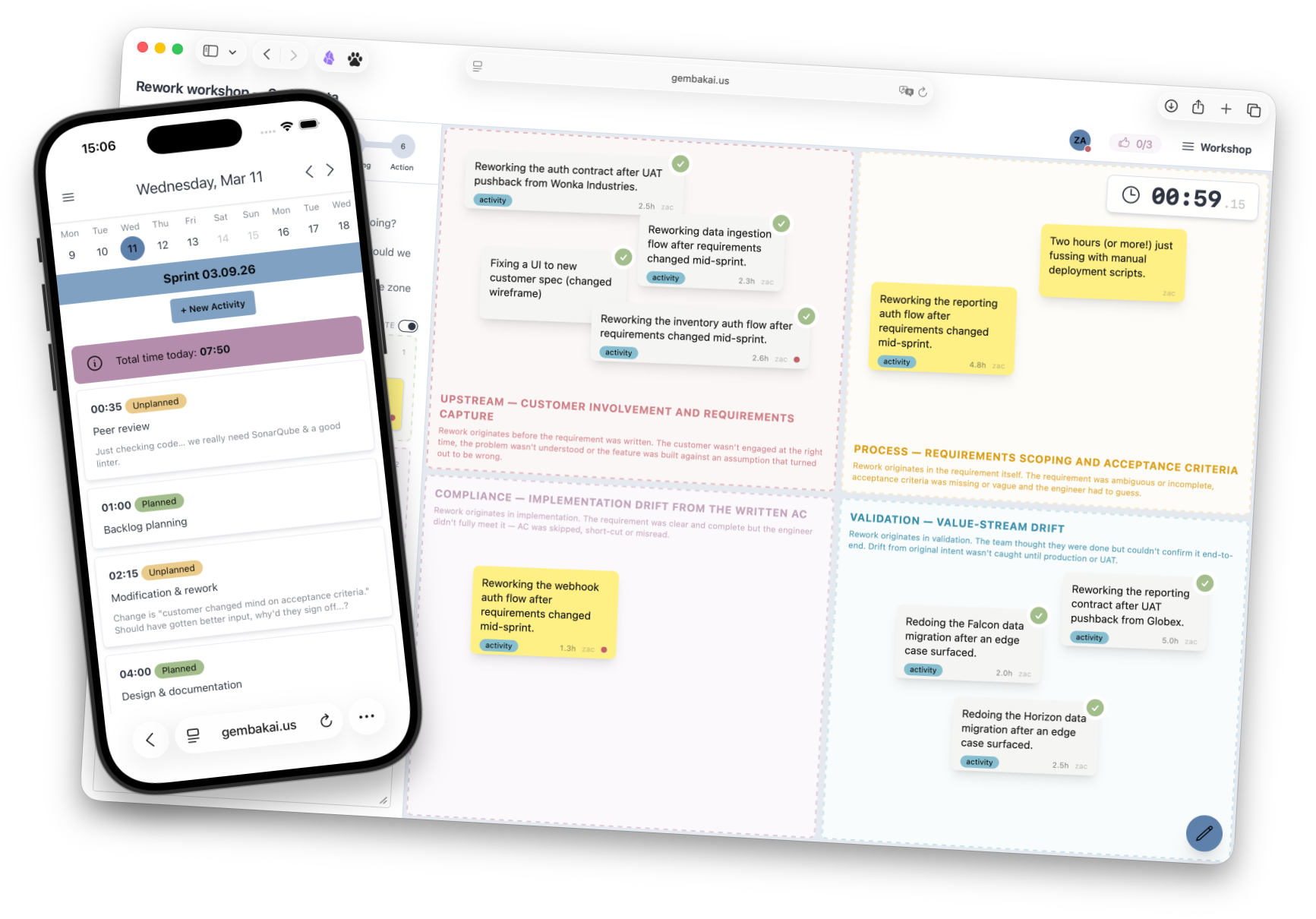
The hours don’t announce themselves when they leak. GembaKai makes them show up on a board, in front of the whole team, with a category and a name.
Make your business case
In just two weeks the readout puts a dollar figure on lost effort. After one quarter, it tells your team what you've recovered. Workshops in the playbook turn the readout into owned actions — and the next readout tells you whether the actions worked.
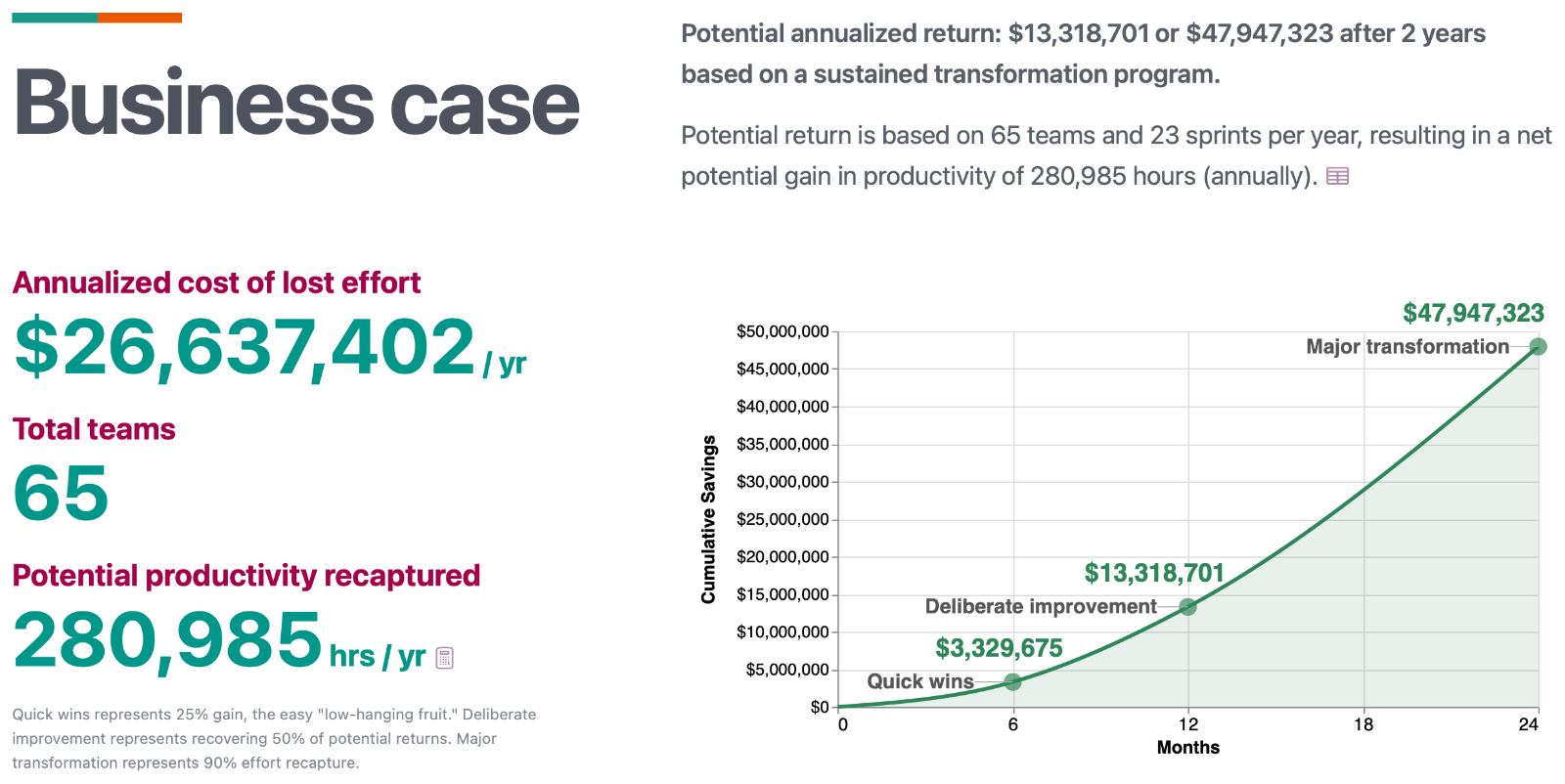
Sample readout — annualized cost of lost effort, recoverable hours and a projected savings curve from quick wins through major transformation. Generated automatically from two weeks of waste walk data.
- CaptureTeams capture activities in the Waste Walk app — pinpointing what drains time and energy.
- MeasureTeam workshops prioritize what to fix — building a strong business case that can’t be ignored.
- ImproveProgress is measured. The number moves, or you learn something new, and the platform drives velocity.
Built on fifty years of Lean
Born at Toyota and proven across fifty years of Lean practice, the waste walk gives your team a shared vocabulary for waste: DOWNTIME, the eight ways work leaks time. Name them and they stop being the weather — they become something you can measure, price and fix.
The kaizen math
One percent better every day compounds to thirty-seven times over a year. No team hits that cadence exactly — the point is the habit. Steady small improvements beat the single heroic 10× fix, and the waste walk is how a team finds the next one.